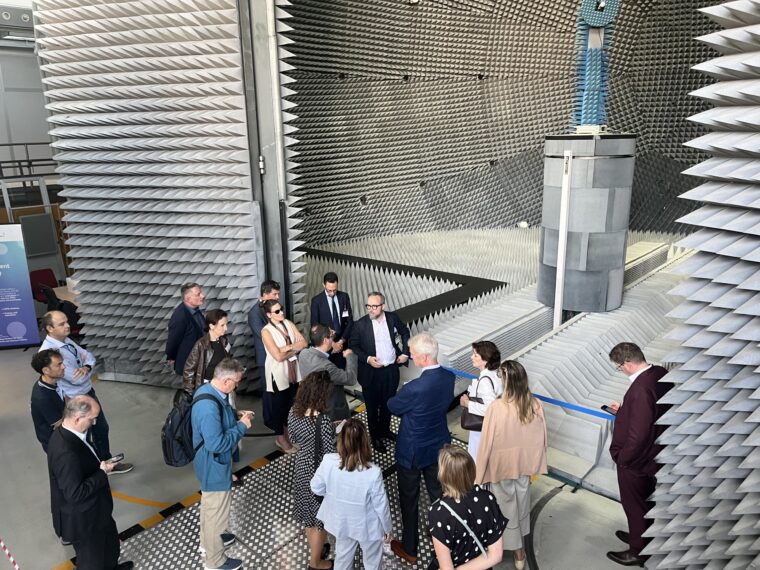
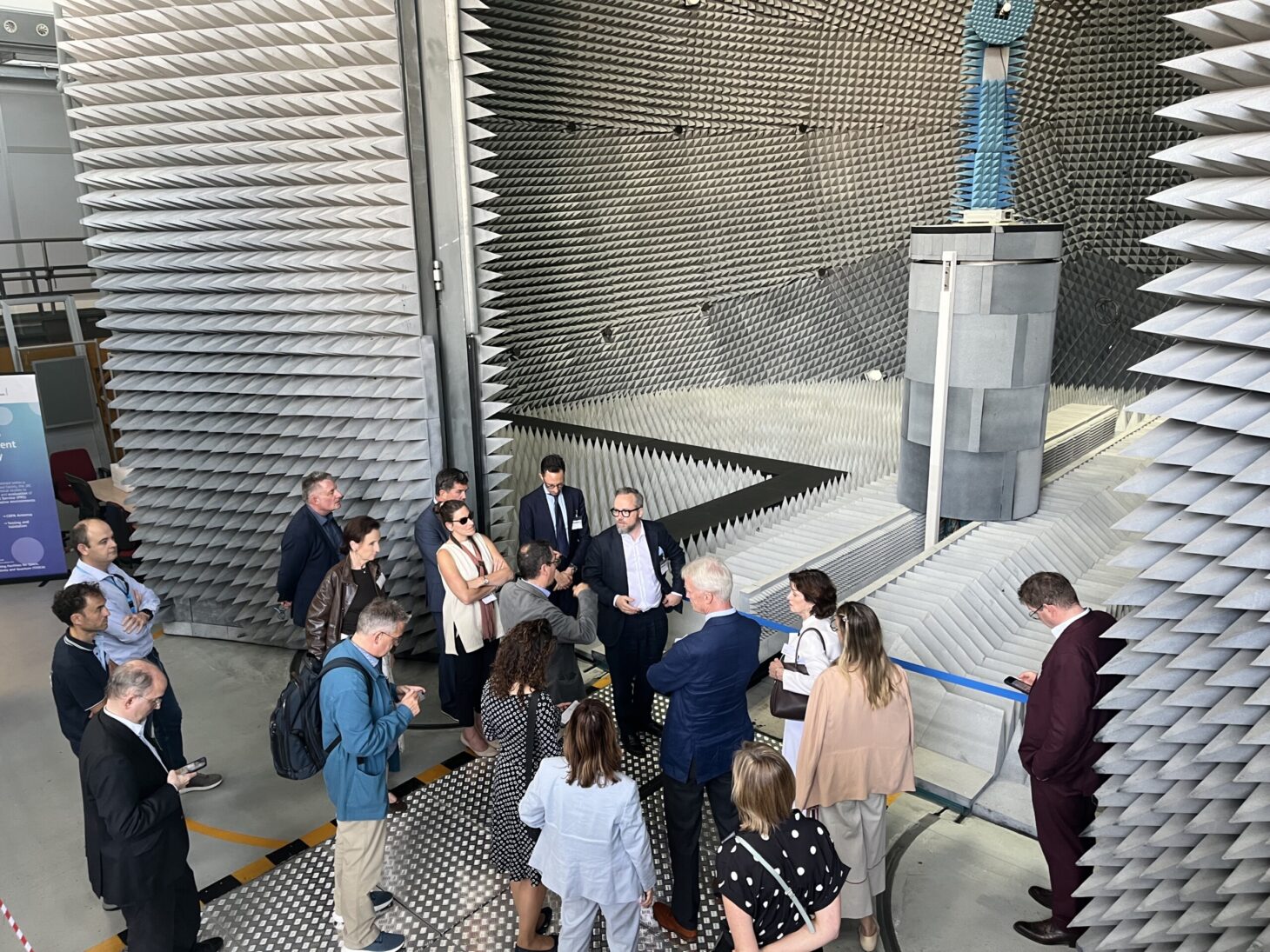
Reflections from Atlantik-Bruecke’s delegation trip to Milan by Moritz von Soden.
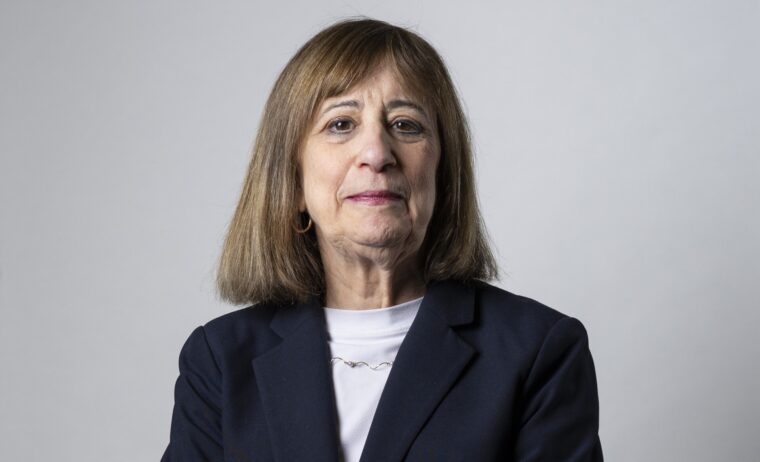
What does a three-year-old AI start-up have in common with a family business that has survived for centuries? More than I would have expected. During Atlantik-Bruecke’s delegation trip to Milan, I had the opportunity to moderate the roundtable “Lombardy in Transition – Family Business, Innovation and the Future of German-Italian Cooperation.” My two guests represented very different worlds: Martina Domenicali, Co-Founder and CRO of the Milan-based AI company Lexroom, and Professor Josip Kotlar of Politecnico di Milano, whose research focuses on strategy, innovation, succession and family business.
We talked about venture capital and family capital, speed and patience, risk and responsibility – and about the difficult question of how companies manage change without losing what made them successful in the first place. When European start-ups begin to scale Martina’s story is remarkable. At 27, she has helped build Lexroom into one of Europe’s rapidly growing legal AI companies. The company has raised more than $75 million in funding. One part of our conversation stayed with me. In the early stages, capital can still be quite local. Entrepreneurs, investors and family offices in regions such as Lombardy are willing to back new ideas.
Transatlantic investment is an enormous asset
But once the amounts become larger and serious international scaling begins, US venture-capital funds become increasingly important. Lexroom itself is a good example: its $50 million Series B was led by Left Lane Capital, an investment firm headquartered in New York. There is nothing wrong with American capital. Transatlantic investment is an enormous asset. But it does raise an uncomfortable European question: Why are we still not better at mobilising our own capital when our most promising companies start to scale? Starting companies is one thing. Financing them all the way into global companies is another.
“A company does not survive for 400 or 500 years by doing the same thing forever.”
2 500 years – and still changing Professor Kotlar brought almost the opposite perspective. We discussed companies such as Acetaia Giusti, whose history reaches back to 1605, and Beretta, which celebrates 500 years of documented history in 2026. At first sight, they could hardly be further removed from a venture-backed AI company. But their longevity is not the result of avoiding change. A company does not survive for 400 or 500 years by doing the same thing forever. It survives by changing repeatedly without losing its identity. And this becomes particularly difficult during succession.
I know that tension from my own family business, Bornemann Gewindetechnik GmbH & Co. KG, a third-generation German manufacturer specialising in customised threaded spindles and power-transmission threads. Bornemann Gewindetechnik is not 400 years old – we have been around for just over 60. But the basic conflict is familiar. The generation that has spent decades building a company naturally wants to protect it. It knows what can go wrong and has a strong sense of responsibility for what has been created. The next generation sees something else: technologies not yet adopted, investments not yet made, markets not yet entered. I experienced this myself during our succession.
How to convince Karl-Heinz to digitalise his manufacturing company
Years ago, I described this conflict through a fictional German SME owner I called “Karl-Heinz”: a successful, experienced entrepreneur who simply did not see why he should digitalise a manufacturing company that was already working perfectly well. The point was not that Karl-Heinz was wrong. Quite the opposite. If you have spent decades building something successfully, caution is rational. The challenge is to combine that experience with the willingness of the next generation to question what already works. My original article, “So überzeugen wir jeden Karl-Heinz – Digitalisierung bei KMUs”, explores this tension in more detail.
Two forms of capital for change This led me to perhaps the most interesting thought from our discussion. We normally treat venture capital and business succession as completely separate subjects. Perhaps we should not. Venture capital puts money and responsibility into the hands of people who want to build something new. Successful succession puts ownership, capital and responsibility into the hands of a new generation that may need to transform something that already exists. Both are, in a sense, capital for change.
“Europe needs more capital for young companies that want to scale.But we also need to make it easier to finance succession.”
Europe needs more capital for young companies that want to scale. But we also need to make it easier to finance succession, ownership transitions and investment in established SMEs. Because there is enormous innovative potential inside companies that already have customers, employees, technology, production capabilities and access to global markets. Sometimes the missing ingredient is not another technology. It is the willingness – and the ownership structure – to use it.
Why Lombardy matters
Lombardy was a particularly interesting place for this discussion. Milan combines finance, technology and entrepreneurship with one of Europe’s strongest industrial regions and a dense network of specialised and family-owned companies. For German SMEs, Northern Italy is also not simply an export market. It is already part of our industrial value chains. At Bornemann Gewindetechnik, for example, we source some of our steel from suppliers in Northern Italy.
The wider Atlantik-Bruecke programme in Milan therefore went well beyond family business and start-ups. Discussions with business and political leaders, including at Generali, addressed financial markets, industrial competitiveness, supply chains and the question of how Germany and Italy can strengthen Europe’s economic position in a changing transatlantic environment.
For me, the trip left one central question: Are we creating the conditions for the next generation of European entrepreneurs – whether they are founding a company or taking over a 60-, 100- or 500-year-old one – to move fast enough? Europe has no shortage of ideas. Nor does it lack remarkable companies. But we can become much better at getting capital and responsibility into the hands of people prepared to change them. That would be a good place to start.
About the author:
Moritz von Soden is Managing Director and third-generation owner of Bornemann Gewindetechnik GmbH & Co. KG, a family-owned manufacturer, and a member of the SME Advisory Council of the German Federal Ministry for Economic Affairs.
Disclaimer: This article was written with the help of AI.